
The room is full of potential customers, suppliers and industry contacts who have voluntarily turned up to discover new products and companies. In marketing terms, that is a rather nice position to find yourself in. The slight catch is that your competitors have probably had exactly the same thought.
Walk into any busy trade exhibition and there will be dozens, perhaps hundreds, of stands competing for attention. Some will be enormous, some will have flashing screens and someone will inevitably have brought a coffee machine capable of attracting visitors from three aisles away.
So how do you make sure people notice your exhibition stand, stop for a conversation and ultimately become customers?
It starts long before the doors open.
A successful exhibition stand should be designed around what you want visitors to do.
Every decision, from the walls and lighting to the staff and follow-up process, should help move people towards that goal.
Start With the Right Exhibition
Firstly make sure you are attending the right exhibition.
It sounds obvious, yet exhibiting at an event without properly considering the audience can become an expensive mistake.
- Who attends the exhibition?
- Are they genuinely your potential customers?
- Are the right decision-makers likely to be there?
- Does the event attract businesses of the size or type you want to work with?
A smaller specialist exhibition packed with your ideal customers may produce far better results than a huge event attracting thousands of people who have little reason to buy from you.
Do your homework first. Your stand can be magnificent but if you are selling the wrong thing to the wrong audience, even the world’s finest spotlighting is unlikely to save the day.


Decide What Success Actually Looks Like
“We want a successful exhibition” is a perfectly reasonable ambition. It is not, however, much of a target.
Before designing your stand, decide exactly what you want the exhibition to achieve.
Perhaps you want 100 qualified leads. Maybe you want 20 product demonstrations booked or £30,000 of new business in your pipeline. You might be launching a new product and want to generate samples, enquiries or appointments.
Once you have a measurable objective, planning becomes considerably easier.
Think about your expected return on investment too. Include the complete cost of exhibiting, not simply the price of your pitch. Stand design, walling, flooring, lighting, graphics, travel, accommodation, staffing and promotional materials all count.
Knowing the real cost gives you a realistic benchmark against which to judge the results.
Design Your Exhibition Stand Around the Customer
One of the biggest mistakes exhibitors make is starting with this question:
“What do we want our stand to look like?”
Try asking:
“What do we want visitors to do when they see our stand?”
That subtle change can completely alter the design.
Perhaps you want people to walk in and try a product. Maybe you need a semi-private area where your sales team can have longer conversations. You could need demonstration zones, display walls, storage, screens or somewhere to serve refreshments.
Temporary exhibition walling is particularly useful because it gives you the freedom to shape the stand around these requirements rather than accepting whatever layout the venue happens to provide.
You can create branded display areas, meeting spaces, walkways, demonstration zones and eye-catching backdrops without building a completely bespoke permanent structure.
At Exhibition Walls Company, temporary wall panels can also be printed or dressed with branding, graphics and marketing messages. The result is a stand that functions as a physical sales environment rather than simply somewhere to put a table and a bowl of sweets. Although, to be fair, the sweets rarely hurt.
Give Exhibition Visitors a Clear Call to Action
What do you actually want someone to do?
- Book a consultation?
- Arrange a demonstration?
- Request a quotation?
- Take a sample?
- Scan a QR code?
- Enter a competition?
- Place an order?
Whatever it is, make it obvious.
Your call to action should feature prominently on the stand and form part of conversations with visitors.
Don’t assume people will work out the next step themselves. Make progressing their interest incredibly easy.
If you have a special exhibition offer, make sure your team understands it and your displays communicate it clearly.
Create Some Buzz Before the Doors Open
Your exhibition marketing shouldn’t begin when you arrive at the venue.
Start promoting your attendance well in advance.
Tell customers and prospects where you will be, when the event is taking place and most importantly why they should visit your stand.
Use your email marketing, website, newsletters and social channels. Share previews of new products or special features. Introduce members of your exhibition team. Offer appointments or demonstrations that can be booked in advance.
If you have invested in something particularly eye-catching, tease it before the event.
During the exhibition, keep posting. Photographs, videos and updates can encourage people already at the venue to seek you out while extending your reach to people who couldn’t attend.
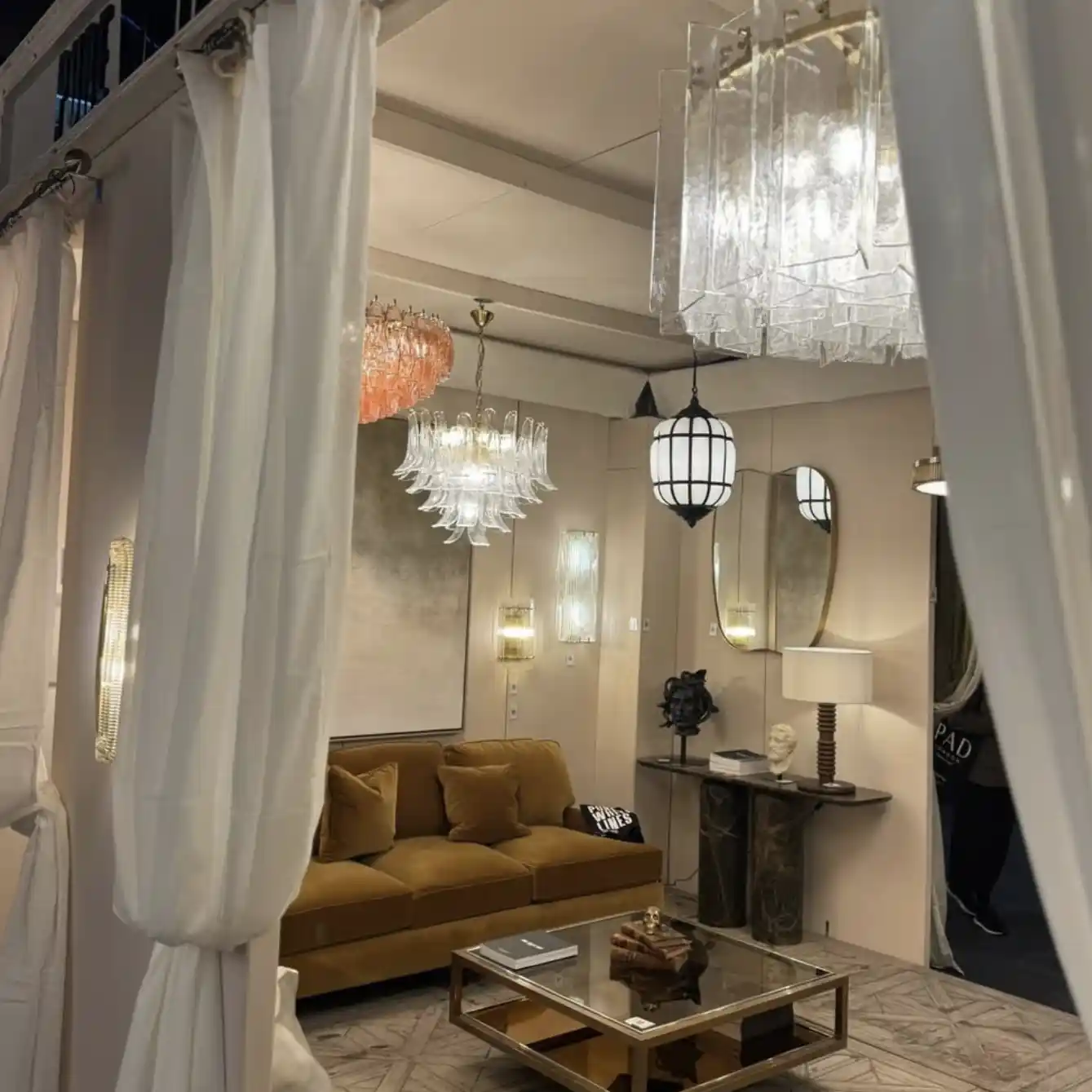


How Lighting and Flooring Help
When planning an exhibition stand, businesses naturally concentrate on what happens at eye level.
But look up and down too.
Good flooring helps define your space from the surrounding exhibition hall and can make a stand feel like a destination rather than simply another rectangle marked out on the floor.
Lighting is equally important.
Use it to highlight products, displays, graphics and key areas. Well-planned exhibition lighting can change the atmosphere completely and make colours, products and printed graphics considerably more striking.
Temporary walls, flooring, lighting, trussing, displays and furniture should ideally be considered as parts of one design rather than separate purchases added at the last minute.
Choose Your Exhibition Team Carefully
Your stand could look as though it has landed from the future but if the staff are sitting behind a desk staring at their phones, your sales figures may remain firmly in the past.
Choose your exhibition team according to your objectives.
If you are selling technical products, make sure somebody can confidently answer detailed questions. If your main goal is lead generation, bring people who enjoy approaching strangers and starting conversations. If major customers are attending, having senior members of the business available can be valuable.
Everyone should understand your products, key messages, offers and objectives before the exhibition begins.
Give staff clear roles too: Who greets visitors? Who qualifies prospects? Who gives demonstrations? Who handles more detailed sales conversations? Who records the lead?
This avoids the classic exhibition manoeuvre where three colleagues simultaneously approach one startled visitor while another promising prospect wanders away unnoticed.
Regular breaks matter as well. Exhibition days can be long and exhausting. Nobody is at their sparkling conversational best after standing under exhibition lighting for eight hours fuelled entirely by coffee and miniature biscuits.
Make It Easy to Understand What You Do
You generally have seconds rather than minutes to catch somebody’s attention as they walk past.
Your stand should communicate three things very quickly:
- Who are you?
- What do you offer?
- Why should somebody care?
Keep the main message simple.
Instead of filling every available surface with paragraphs of corporate copy, concentrate on one or two compelling benefits.
People should be able to glance at your stand from the aisle and have a pretty good idea why they might want to stop.
Your branding should be visible too. Temporary exhibition walls provide plenty of usable display space for graphics, logos, photography and messaging, allowing you to create a cohesive environment rather than a collection of unrelated banners.
Give People a Reason to Stop
Being attractive is good. Being interesting is better.
Think about what will interrupt somebody’s journey down the aisle.
It might be an unusual product demonstration, interactive display, striking piece of lighting or something unexpected that people simply want to investigate.
Exhibition Walls Company recently took this idea rather literally with Can U Chill – a giant replica drinks can that is also a working fridge. Designed for drinks brands, it creates a highly visible centrepiece while keeping samples cold and ready to serve.
It is a useful example of a wider exhibition principle. The best features can perform more than one job.
Something that attracts attention, demonstrates your product, creates a photo opportunity and starts conversations is earning its floor space.
Whatever your industry, look for your equivalent. Give people something to see, touch, try, photograph or talk about.
“That’s interesting” is often a much better beginning to a sales conversation than “Would you like a leaflet?”
Follow Up While People Still Remember You
The exhibition finishing is not the end of your campaign. In many ways, it is where the selling really begins.
Follow up quickly.
People may have visited dozens of stands and spoken to scores of businesses. Leave it too long and that brilliant conversation you had on Tuesday afternoon becomes “Who were they again?”
Personalise follow-ups where possible. Mention the product they discussed, the problem they wanted to solve or the quotation they requested. Most importantly, do what you promised.
If you said you would send information on Monday, send it on Monday. Reliability is a surprisingly powerful sales technique.
Review the Results
Once the dust has settled, compare the results with the targets you established at the beginning.
- How many visitors stopped?
- How many qualified leads did you generate?
- How many appointments or demonstrations were booked?
- What value entered your sales pipeline?
- Which stand features attracted the most attention?
- Ask your team what worked and what didn’t. They will often have valuable
- observations about visitor flow, recurring questions, bottlenecks and opportunities to improve the layout.
Then use everything you have learned to make your next exhibition even better.
Build a Stand That Works as Hard as Your Sales Team
The most effective exhibition stands aren’t necessarily the biggest or most expensive.
- They are the ones where everything has a purpose.
- The layout encourages visitors inside.
- The branding explains the offer.
- Lighting attracts attention.
- Displays start conversations.
- Staff know exactly what they are doing.
- Calls to action make the next step obvious and
- leads are followed up while interest is still fresh.
Get those ingredients working together and an exhibition stand becomes much more than a collection of walls and graphics. It becomes a genuine sales tool.
If you’re planning an exhibition and need help creating a stand that attracts attention while making intelligent use of your available space, get in touch with Exhibition Walls Company.
Need help with temporary exhibition walling, bespoke layouts, branded walls, flooring, lighting, trussing, displays and complete stand solutions…whether you already have a detailed design or you’re currently staring at an empty floor-plan wondering where on earth to begin, we can help turn your ideas into a practical exhibition space designed to get noticed.
Giving people a reason to stop is where things get interesting.





